


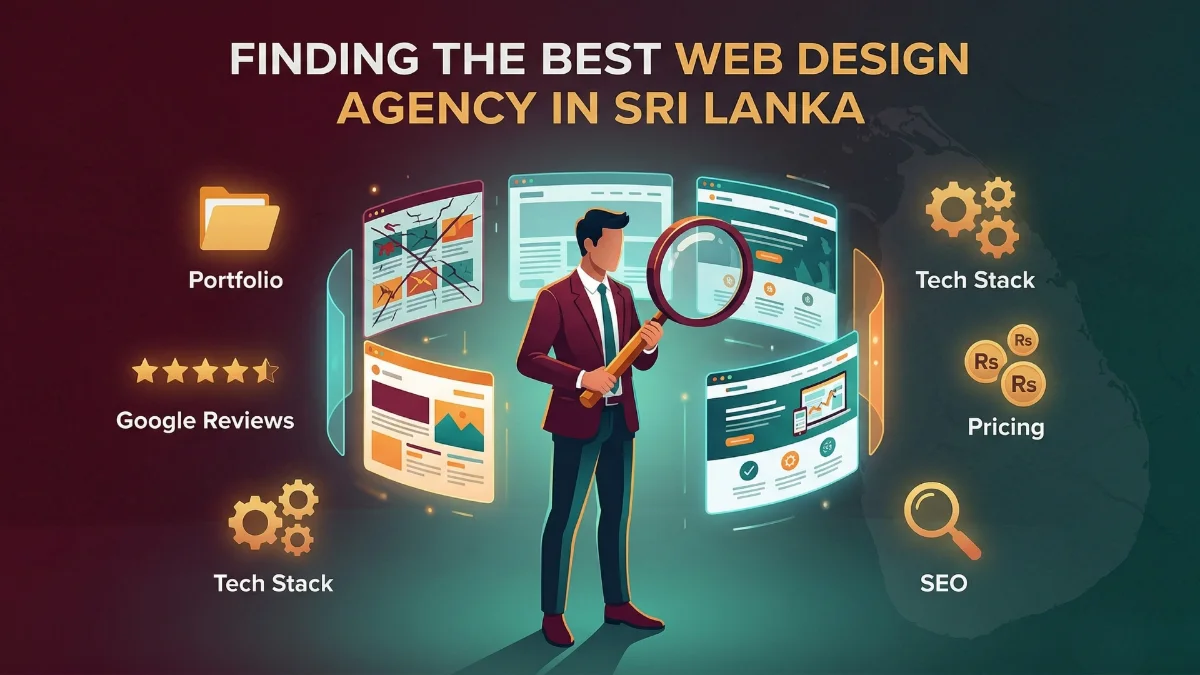
How to Choose the Best Web Design Company in Sri Lanka
Let me be honest with you. Picking a web design company in Sri Lanka is harder than it should be.
There are hundreds of agencies, freelancers, and “we do everything” companies out there. Some are genuinely good. Some are terrible. And the tricky part? Their websites all look pretty much the same, they all promise the same things, and they all claim to be “the best.”
I’ve been building websites in Sri Lanka since 2018. My company, Lexiata, has delivered over 1,500 projects at this point. Along the way, I’ve seen clients come to us after getting burned by other agencies. I’ve heard the horror stories. Websites that took six months instead of two weeks. Developers who disappeared after taking the advance payment. Sites that looked decent on the surface but fell apart under the hood.
So I decided to write this guide. Not to sell you on Lexiata (though obviously I’d love to work with you), but to genuinely help you make a smarter decision. Whether you choose us or someone else, these are the things you absolutely need to check before handing over your money.
Start With Their Portfolio. Not Their Words.
Every web design company in Sri Lanka will tell you they’re “creative” and “professional.” That’s marketing talk. What actually matters is the work they’ve done.
Go to their portfolio page. Look at the websites they’ve built. Open those sites in a new tab and actually browse them. Click around. Check them on your phone. Ask yourself a few simple questions:
Do these websites look modern, or do they feel like they were designed five years ago? Are they fast, or do they take forever to load? Is the design consistent across pages, or does it feel disjointed? Can you easily find what you’re looking for as a visitor?
If a company can’t show you at least 10 to 15 solid projects, that’s a concern. If their portfolio only has three websites from 2022, you should probably keep looking.
Here’s another thing people miss. Don’t just look at the screenshots. Visit the actual live websites. Screenshots can be polished and edited, but a live website tells the truth. You’ll quickly see if the site is slow, if the mobile version is broken, or if the design only looks good in one specific screenshot angle.
Check Google Reviews. Real Ones.
This is probably the single most reliable way to evaluate a web design company in Sri Lanka. Google reviews are hard to fake in large numbers, and they give you genuine insight into what working with that company is actually like.
Search for the company on Google Maps. Look at their rating and read through the reviews carefully. Pay attention to a few things.
First, the overall rating. Anything below 4.0 stars is a red flag. A company with a 4.5 or 5.0 rating with a decent number of reviews has clearly done something right.
Second, the content of the reviews. Generic reviews like “good service” don’t tell you much. Look for reviews that mention specific things. Did the reviewer talk about communication? Delivery time? Post-launch support? The more detailed the reviews, the more trustworthy they are.
Third, how the company responds to negative reviews. Every company gets the occasional bad review. What matters is how they handle it. A professional, thoughtful response shows maturity. Getting defensive or ignoring complaints is a bad sign.
At Lexiata, we’ve maintained a 5.0 star Google rating across hundreds of reviews, and that’s something we genuinely take pride in. Not because the number looks good, but because it reflects real client experiences.
Ask About Their Tech Stack
This might sound technical, but it matters more than you think. The technology your website is built on determines how fast it loads, how easy it is to update, how secure it is, and how well it ranks on Google.
In Sri Lanka, most web design companies build on WordPress. That’s fine. WordPress powers over 40% of the internet, and it’s a proven, reliable platform when used correctly.
But here’s where you need to dig deeper. Ask them these questions:
Do you use a premium page builder like Elementor Pro, or do you use free/nulled versions? Free and pirated builders often cause security and performance issues down the line.
What hosting do you provide? Cheap shared hosting might save money today but will cause headaches tomorrow. Slow loading, frequent downtime, and poor security are common with budget hosting.
Do you include an SSL certificate? In 2026, this shouldn’t even be a question. If a company isn’t including SSL (the padlock icon in the browser), walk away immediately.
Do you set up caching and image optimization? These directly affect your website’s loading speed, which affects both user experience and Google rankings.
The best web design companies in Sri Lanka will happily explain their tech stack in plain language. If someone gets defensive or vague when you ask technical questions, that’s not a great sign.
Pricing Transparency Is Non-Negotiable
Here’s something that frustrates a lot of business owners in Sri Lanka. You visit a web design company’s website, you like what you see, and then… there’s no pricing anywhere. Just a “Contact us for a quote” button.
Now, I understand that every project is different and exact pricing can vary. But a good company should at least give you a starting point. Package structures, price ranges, what’s included in each tier. Something that helps you understand whether they’re within your budget before you pick up the phone.
Hidden pricing often means one of two things. Either the company charges different prices to different clients based on how much they think you’ll pay (not great). Or they haven’t structured their services clearly enough to offer standard packages (also not great).
At Lexiata, we publish our pricing openly on our website. Corporate websites start at Rs 39,900. E-commerce sites start at Rs 64,900. Premium custom builds start at Rs 199,900. You know exactly what you’re getting and what it costs before we even have a conversation. No surprises, no hidden fees.
When comparing prices across different companies, make sure you’re comparing like for like. A Rs 25,000 website that doesn’t include hosting, SSL, SEO setup, or mobile responsiveness isn’t actually cheaper than a Rs 40,000 website that includes all of those things.
What Happens After the Website Is Built?
This is where so many people get caught out. They focus entirely on the build process and forget to ask what happens after launch.
Your website isn’t a one-time project. It’s a living thing that needs regular updates, security patches, backups, and occasional content changes. If your web design company disappears after delivering the final files, you’re going to have problems six months down the line when something breaks.
Before signing up, ask these questions clearly:
Do you offer ongoing maintenance? What does it include and what does it cost? If something breaks after launch, how quickly do you respond? Can I call or WhatsApp you directly, or do I have to submit a support ticket and wait? Will you train me on how to update the website myself?
The best web design companies in Sri Lanka offer structured maintenance plans that cover updates, backups, security monitoring, and minor content changes. They also provide training so you can handle basic tasks independently.
At Lexiata, our support response time is within 2 hours during business hours, and our WhatsApp line is available 24/7 for urgent issues. We also include hands-on training with every project so clients feel confident managing their own websites.
SEO Should Be Built In, Not Bolted On
If a web design company in Sri Lanka builds your website without any SEO consideration, they’ve essentially built you a beautiful shop in the middle of a desert. It looks great, but nobody can find it.
SEO (Search Engine Optimization) is not something you add after the website is finished. It needs to be part of the design and development process from day one.
When evaluating a web design company, ask them what SEO work they include as standard. At minimum, you should expect proper title tags and meta descriptions on every page, clean URL structures that are readable and keyword-friendly, schema markup for your business (LocalBusiness, FAQ, Breadcrumbs), an XML sitemap submitted to Google Search Console, proper heading hierarchy (H1, H2, H3 used correctly), image optimization with descriptive alt tags, and mobile-first responsive design because Google uses mobile-first indexing.
If a company tells you “we’ll handle SEO later” or “SEO is a separate service,” that’s fine for advanced SEO work like content strategy and link building. But the technical SEO foundation should absolutely be part of the website build itself.
I’ve seen too many beautiful websites that don’t rank on Google because nobody bothered to add a meta description or configure a sitemap. Basic SEO isn’t rocket science, but it does require attention and expertise.
Communication Style Matters More Than You Think
You’re going to be working closely with your web design company for at least a few weeks, possibly longer. How they communicate during this process will determine whether it’s a smooth experience or a frustrating one.
Pay attention to how they respond during the initial inquiry phase. Do they reply quickly or take days to get back to you? Are their responses clear and helpful, or vague and generic? Do they ask thoughtful questions about your business, or do they jump straight to selling you a package?
A company that communicates well before you become a client will likely communicate well during and after the project. A company that’s slow, unclear, or dismissive during the sales phase? That’s probably not going to improve once they have your money.
In Sri Lanka, WhatsApp is the most common communication channel for web design projects. Make sure the company is responsive on WhatsApp and that you have a direct line to someone who can actually make decisions. You don’t want to be stuck in a loop of “I’ll check with my team and get back to you” for every small question.
Don’t Fall for the “Unlimited Everything” Trap
Some web design companies in Sri Lanka advertise unlimited pages, unlimited revisions, unlimited features. Sounds amazing, right?
Here’s the reality. Nothing is truly unlimited. A company offering unlimited pages isn’t going to build you a 500-page website for Rs 30,000. A company offering unlimited revisions isn’t going to happily redesign your homepage twelve times.
These “unlimited” offers are usually marketing tactics designed to make the package sound more valuable than it actually is. What you should focus on instead is whether the company delivers quality work that doesn’t need twelve revisions in the first place.
A better approach is to look for companies that offer a clear, defined scope. Five pages, ten pages, specific features included. Then ask about additional page costs and revision policies upfront. Clarity beats vague promises every time.
Look for Industry Experience
Not all websites are the same. A corporate website for a law firm has completely different requirements than an e-commerce store selling clothing or a tourism website promoting tour packages.
When evaluating web design companies, check if they have experience in your specific industry. Have they built tourism websites before? Do they understand e-commerce checkout flows? Have they worked with restaurants and understand the importance of menu presentation and online ordering?
Industry experience means the company already knows the common challenges, best practices, and user expectations for your type of business. This saves time, reduces back-and-forth, and usually results in a better final product.
At Lexiata, we’ve built dedicated packages for specific industries: corporate websites, e-commerce stores, tourism sites, restaurant websites, salon booking sites, classified platforms, marketplace solutions, and learning management systems. Each package is designed with the specific needs of that industry in mind, not a generic one-size-fits-all template.
Ask to See Their Own Website’s PageSpeed Score
Here’s a simple test that most people don’t think to do. Go to Google PageSpeed Insights (pagespeed.web.dev) and enter the web design company’s own website URL.
If a company claims to build fast, optimized websites but their own site scores 40 out of 100 on PageSpeed, that tells you everything you need to know. They’re not practicing what they preach.
A good web design company’s website should score at least 80 or above on desktop and 70 or above on mobile. If they can’t optimize their own website, how are they going to optimize yours?
While you’re at it, check if their website is mobile responsive. Open it on your phone and see if it looks and works properly. Test the navigation, read the content, try filling out their contact form. If the experience is clunky or broken on mobile, that’s a major red flag in 2026.
Red Flags to Watch Out For
Over the years, I’ve noticed certain patterns that almost always indicate trouble. Here are the biggest warning signs when evaluating a web design company in Sri Lanka.
No portfolio or very few projects shown. A legitimate company should have plenty of work to showcase.
Using pirated or nulled themes and plugins. This is more common than you’d think in Sri Lanka. Nulled software doesn’t receive security updates and can contain malicious code. Always ask if they use licensed, legitimate software.
Extremely low pricing with no clear explanation. If someone is offering a full website for Rs 10,000, you need to ask yourself how they’re making money. The answer usually involves cutting corners on hosting, security, design quality, or all three.
No physical address or verifiable contact information. Legitimate businesses have real locations, phone numbers, and email addresses. Be cautious with companies that only have a Gmail address and no other contact details.
Pressure to sign immediately. Good companies are confident in their offering and don’t need to rush you into a decision with “this price is only valid today” tactics.
No contract or written agreement. Every professional web design project should have a written agreement covering scope, timeline, payment terms, and deliverables. If a company is reluctant to put things in writing, protect yourself and walk away.
The Decision Framework
To make your final decision easier, here’s a simple framework you can use. Rate each company you’re considering on these ten criteria, giving each a score from 1 to 10.
Portfolio quality and relevance to your industry. Google review rating and number of reviews. Pricing transparency and value for money. Communication speed and clarity during initial inquiry. SEO knowledge and what’s included as standard. Post-launch support and maintenance plans. Tech stack and development approach. Industry experience with your type of website. Their own website’s speed, design, and mobile experience. Overall professionalism and trustworthiness.
Add up the scores. The company with the highest total is likely your best choice. But also trust your gut feeling. If something feels off during the initial conversations, it probably is.
Final Thoughts
Choosing a web design company is one of the most important digital decisions your business will make. The right partner will build you a website that attracts visitors, builds trust, and generates real business results for years to come. The wrong partner will waste your time, money, and patience.
Take the time to do your research. Check portfolios, read reviews, compare pricing, ask tough questions, and don’t rush into a decision just because someone offered you a discount.
Your website is the digital face of your business. It deserves to be built by people who genuinely care about getting it right.
And if you’d like to see how Lexiata approaches web design, take a look at our portfolio or reach out for a free, no-obligation consultation. We respond within 2 hours, and we’re always happy to chat about your project, even if you’re still in the early research phase.
Frequently Asked Questions
How much should I pay for a website in Sri Lanka? It depends on what you need. A solid corporate website typically costs between Rs 39,900 and Rs 200,000. E-commerce sites range from Rs 64,900 to Rs 500,000. Be cautious of prices that seem too good to be true, because they usually are. Make sure you understand exactly what’s included before comparing.
How long does it take to build a professional website? A well-designed corporate website takes about 7 to 14 working days after content is ready. E-commerce projects usually need 14 to 30 days. If someone promises to build a quality website in 2 to 3 days, the result will likely reflect that rushed timeline.
Should I choose a company or a freelancer? Both can do excellent work. Companies generally offer more reliability, structured processes, and ongoing support. Freelancers can be more affordable and flexible. The key is checking their track record, reviews, and communication style regardless of whether they’re a company or individual.
What if I’m not happy with the design? Before starting, clarify the revision policy. Most professional companies offer multiple revision rounds. At Lexiata, we offer unlimited design revisions on our Advance and Premium plans because we want you to be completely satisfied before launch. Make sure whatever company you choose has a clear revision process in writing.
Can I move my website to a different company later? With WordPress, yes. WordPress is an open platform, and your website files and database belong to you. You can move your site to any hosting provider or hire a different developer for future work. Be cautious of companies that use proprietary systems that lock you in and make it difficult or impossible to migrate.